
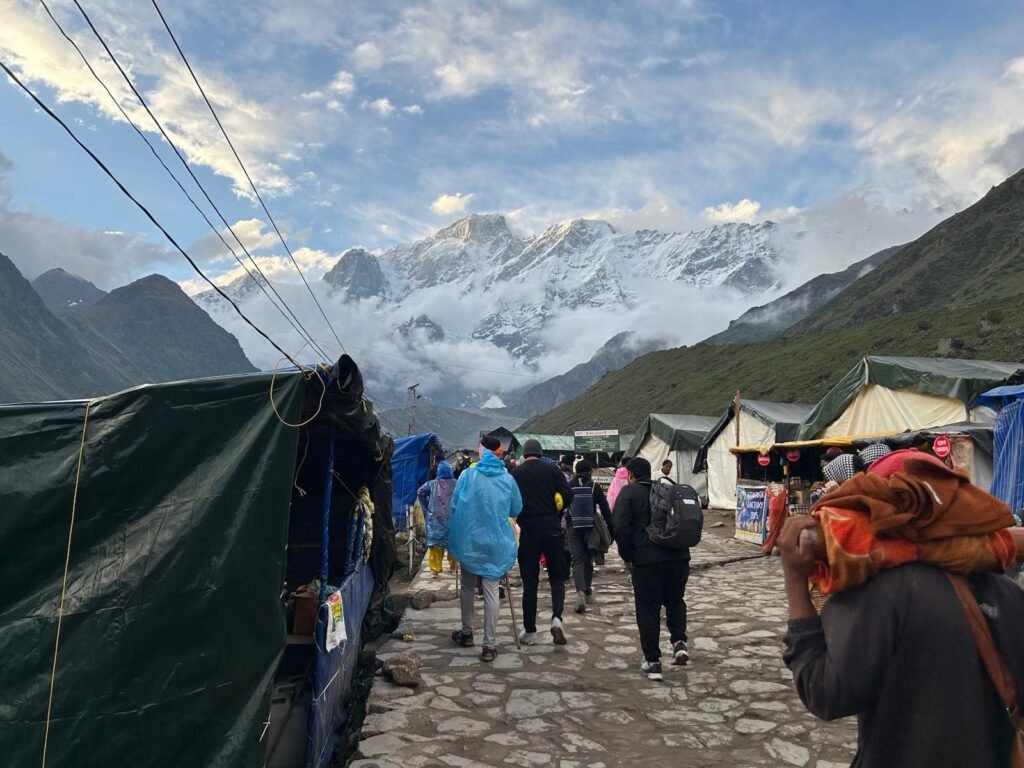
This trek does not reward speed or certainty.
It teaches adjustment — of breath, pace, and expectation.
Kedarnath is not about arrival.
It is about listening to the body as the mountain insists.
For a long time, I believed fear was something to overcome. Something to push through, outpace, or silence. Adventure travel, I assumed, would either defeat fear or prove my ability to ignore it. The Kedarnath trek corrected that idea quietly, step by step.
Fear did not arrive as panic. It arrived as awareness.
The path rose steadily, breath shortened, and the body began making small, honest demands. Rest here. Slow down now. Pay attention. Fear appeared not as an emotion, but as information — about weather, footing, stamina, time. It was practical, unsentimental, and persistent. Ignoring it felt reckless rather than brave.
Fatigue followed, and with it a shift. When the body is tired, fear loses its imagination. There is no excess energy left to catastrophise. Attention narrows to the immediate — the next step, the next breath, the next patch of ground. Fear stops projecting into the future and settles into the present. It becomes quieter, clearer.
What adventure travel began to teach me — and Kedarnath confirmed — is that fear is not a warning sign telling you to stop. It is a signal asking you to recalibrate. To listen more closely. To move differently. The mountain did not reward force or determination. It responded only to pacing, patience, and respect for limits.
Somewhere along the trek, fear stopped being something I carried against my will. It became something I walked with. It sharpened awareness. It improved decision-making. It insisted on humility. Instead of asking Can I do this? the question became How do I do this without harm — to myself or the land?
Reaching Kedarnath itself did not bring triumph. There was no surge of victory, no sense of having conquered anything. The shrine stood quietly against the mountain, indifferent to effort. Arrival felt like a pause, not a climax. And in that pause, something settled.
I realised then that adventure travel had not made me fearless. It had made me more precise. More willing to stop. More attentive to discomfort before it became danger. Fear, once something I resisted, had become a collaborator — guiding pace, sharpening judgment, keeping ego in check.
Leaving the mountains, this relationship stayed with me. Fear no longer felt like a weakness to be hidden or a challenge to be defeated. It felt like a form of intelligence — one that asks for respect rather than denial. Adventure travel did not remove fear from my life. It taught me how to listen to it without letting it lead.
And that, I think, is the quiet gift of places like Kedarnath. They do not make you brave. They make you attentive. They teach you that fear, when acknowledged, does not limit you — it keeps you alive, present, and honest.
It is not test on Speed – It is endurance and Strength