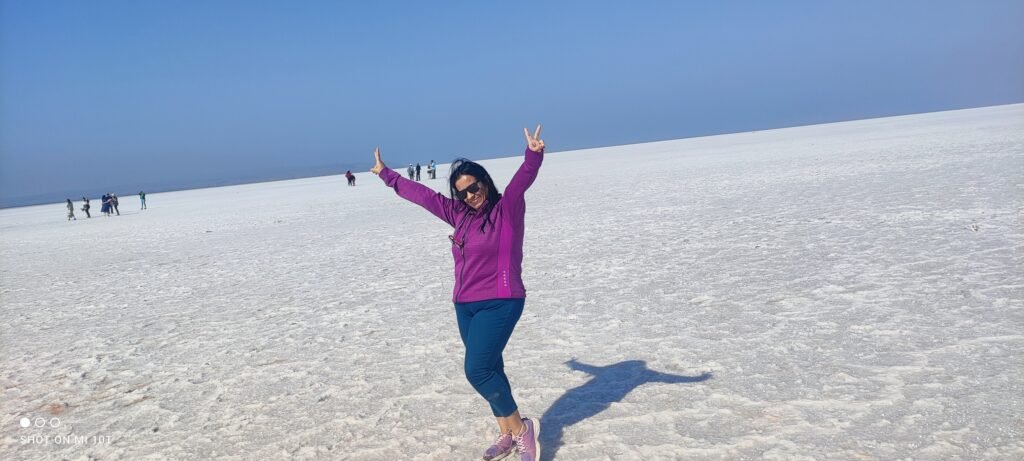
he first steps onto the Great Rann of Kutch are disorienting. The ground offers no cues — no rise, no shadow, no change in texture — only a blinding continuity that stretches outward in every direction. Distance becomes unreliable. What looks close refuses to arrive; what seems far dissolves into light and glare.
Walking here recalibrates the body. There is nothing to move toward, no edge to follow, no shelter to anticipate. Sound thins out. The horizon holds steady, indifferent to progress. Even time feels altered, expanding and contracting without markers. The Rann does not respond to presence; it simply allows it, briefly.
It is only after standing still for a while that the place begins to register. Not as emptiness, but as refusal — a landscape that gives nothing back, no reassurance, no spectacle, no story. In that withholding, the Great Rann reveals its power. It does not ask to be understood or endured. It asks you to adjust, quietly, to a scale that is not yours.
A few white swans on one side of the horizon against the blue sky , shows how simple natures canvas is…before it gets ‘trampled’ by human Imagination !
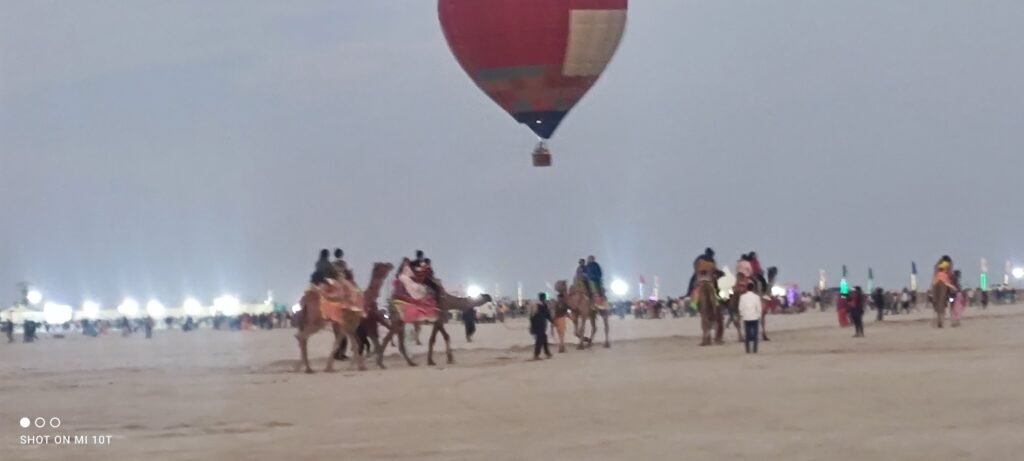
The Great Rann of Kutch does not always begin in silence. Sometimes it begins with movement — camels crossing the salt, people gathering at a distance, a hot-air balloon lifting briefly into a pale sky. Lights flicker along the horizon, and for a moment the vastness feels occupied. But even then, the ground does not respond. The salt stretches on, indifferent to presence, absorbing sound and scale until spectacle feels temporary.
By daylight, the Rann strips itself bare again. The salt flattens into white continuity, the horizon pulls farther away, and people reduce to scattered points — almost incidental. Standing there, arms raised instinctively against the openness, the body tries to register distance but fails. There is nothing to measure yourself against. The land offers no markers, no shelter, no sense of arrival. It simply holds space.
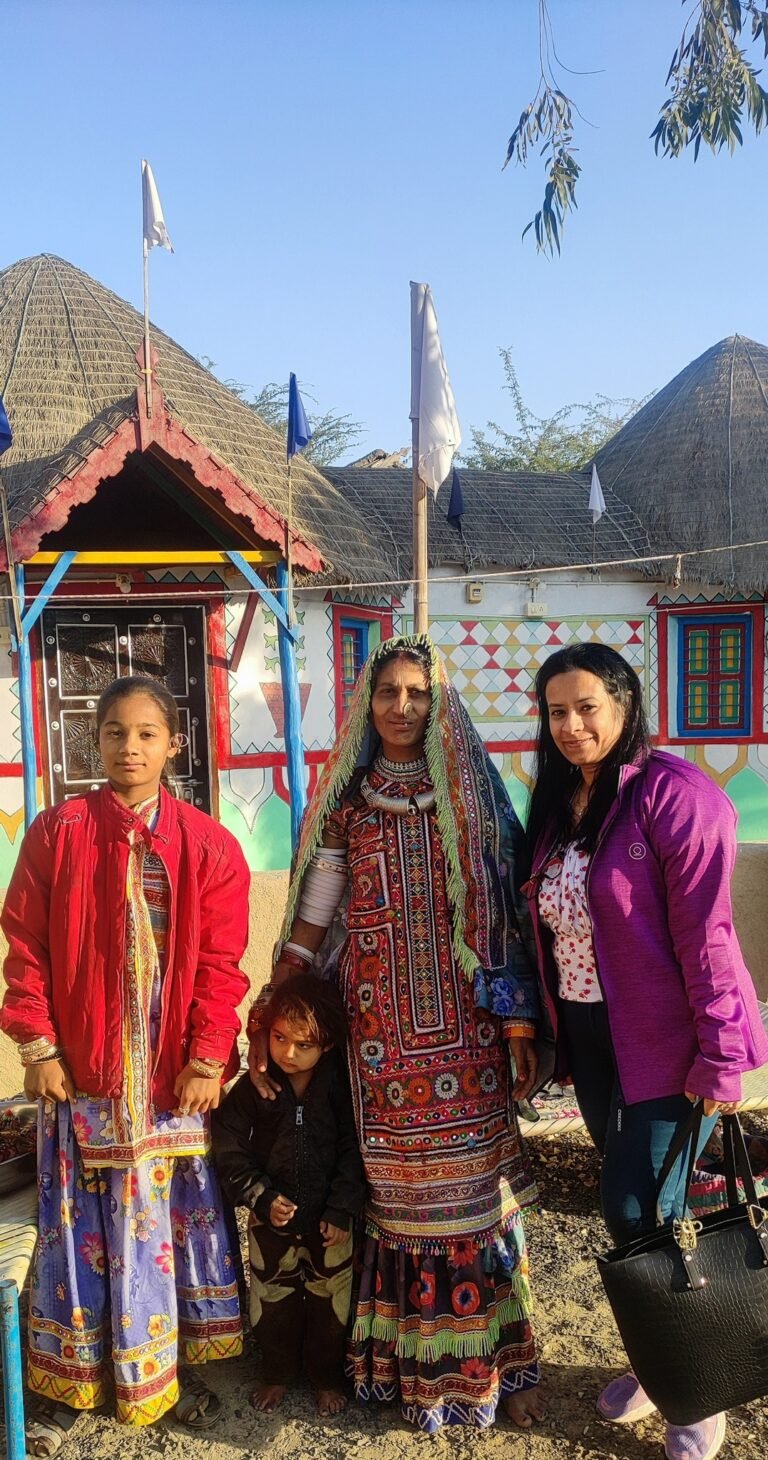
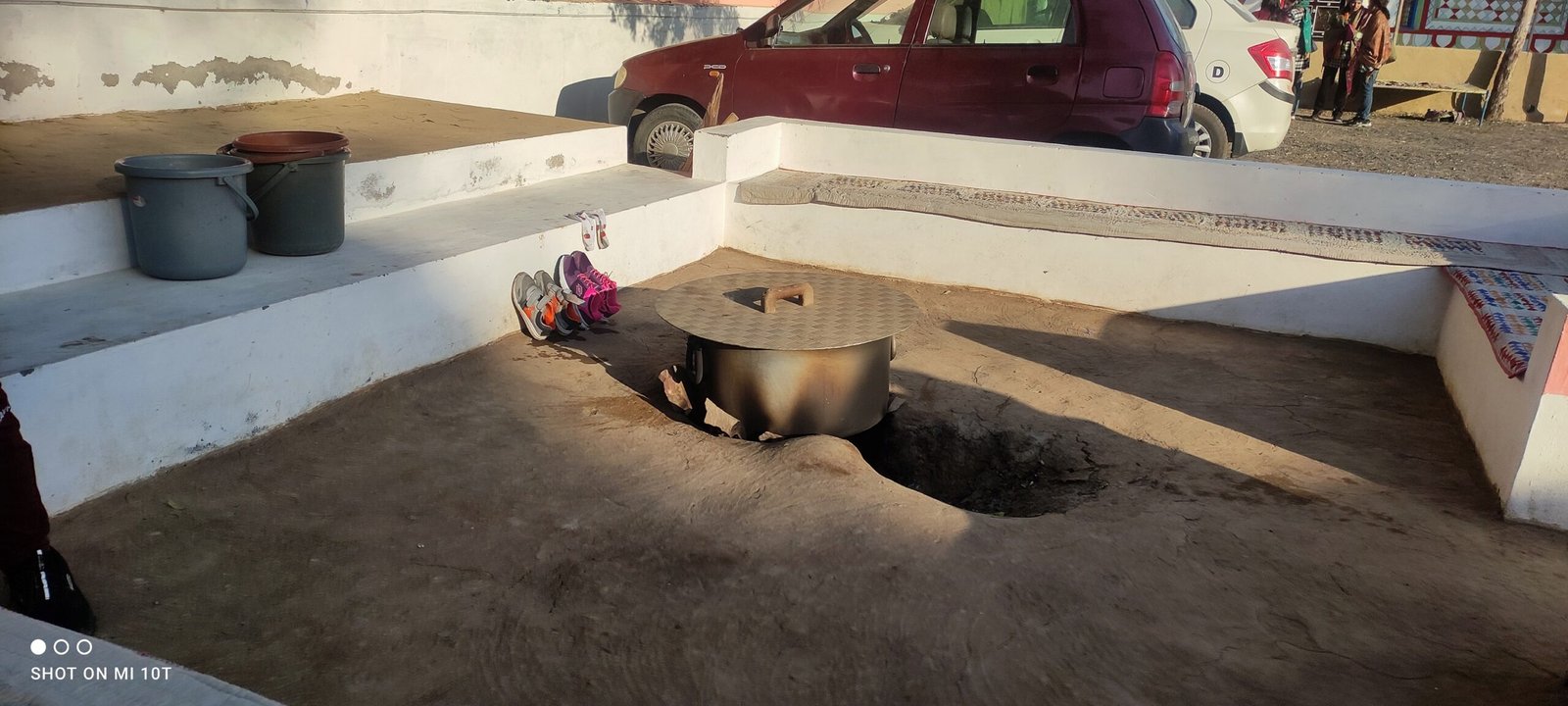
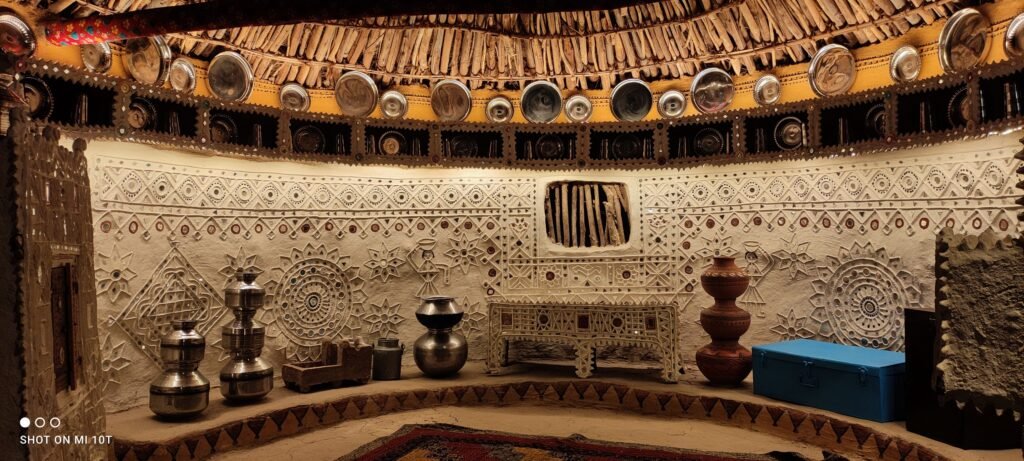
What grounds the experience are the lives that edge this expanse — villages built low and close to the earth, painted walls and thatched roofs, routines shaped around heat, water, and work. A cooking hearth sits recessed into the floor, functional and unremarkable, carrying the quiet intelligence of survival. After the openness of the Rann, these interiors feel deliberate, contained, human. The salt may dominate the landscape, but it is these small, grounded spaces that remind you how people have learned to live alongside a place that gives very little back.
Contrasting The Rann and Dholavira (eMPTINESS Vs Order)
The difference became clearer later, at Dholavira. Where the Rann offers nothing to hold onto, Dholavira offers structure — walls, reservoirs, and a sense of measured intention. The salt erases markers; the city preserves them. Standing inside Dholavira, the past feels calm and resolved, its intelligence still legible. The Rann, by contrast, refuses legibility altogether. One holds memory carefully. The other dissolves it, over and over again.