
Awareness begins before anything happens. It is the quiet scanning of surroundings, the habit of observing patterns — who occupies a space, how people move through it, what feels ordinary and what doesn’t.
In Benaras, awareness meant understanding the rhythm of the ghats and lanes. Which areas emptied after dusk, which remained active late into the night, where silence signalled rest and where it suggested withdrawal. The city was not unsafe, but it demanded sensitivity to time and context.
In the vast openness of the Great Rann of Kutch, awareness shifted from people to environment. Distance, light, and orientation became the primary concerns. Safety here meant not venturing too far alone, tracking the sun, respecting the scale of emptiness rather than testing it.
Situational awareness is not hypervigilance. It is attentiveness without anxiety — staying present enough to respond early instead of reacting late.
Where you stay shapes how safely you move. Accommodation becomes more than comfort; it becomes a base of stability.
In smaller towns near Ajanta Caves and Ellora Caves, choosing places close to activity rather than isolation mattered. Proximity to transport, shops, and visible routines created a sense of grounding. Remote charm was less important than reliable accessibility.
In the coastal villages of the Konkan, staying with families or in locally run homestays provided informal oversight — people who noticed when you left, when you returned, whether you had eaten. Safety here emerged from being recognised rather than anonymous.
Accommodation decisions were rarely about luxury. They were about predictability — knowing what the night would look like before it arrived.
Night transforms places. Streets that feel ordinary by day can shift in tone after dark. Travelling alone requires accepting that not every movement needs to be made.
In Kedarnath, night brought cold, fatigue, and reduced visibility — risks that were environmental rather than social. Safety meant staying where I was, conserving energy, allowing the day to end without pushing for more.
In cities, the decision was often simpler: return earlier, use well-lit routes, prioritise familiarity over curiosity. This was not restriction; it was strategy — choosing the conditions under which movement felt controlled.
Night movement became less about courage and more about judgment.
Intuition is difficult to explain because it operates beneath conscious reasoning. It appears as hesitation, discomfort, or a quiet sense that something is slightly off.
In the forested stretches of the The Dooars, intuition meant respecting the unpredictability of terrain — not walking alone too far into unfamiliar paths, turning back when silence felt too complete, accepting uncertainty without needing to resolve it.
In crowded environments, intuition worked differently: sensing when attention lingered too long, when conversations shifted tone, when leaving a space was the simplest response.
Learning to trust intuition required unlearning the impulse to be polite at the expense of comfort. Departure became an acceptable answer.


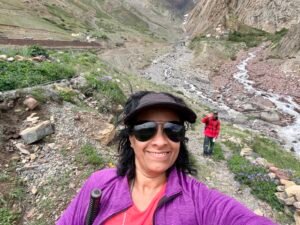
While most visitors stop at Mudh Village to soak in the dramatic landscapes of Spiti, a short trek along the Pin Bhabha route reveals an entirely different side of the valley. Walking beside the turquoise ‘Pin’ river, surrounded by rainbow coloured mountains and endless silence, I discovered why this trail is considered one of the most beautiful gateways between Spiti and Kinnaur.
pIN vALLEY -2 day Itinery How to Reach Pin Valley National Park Pin valley which is actually Pin Valley national Park and house to many
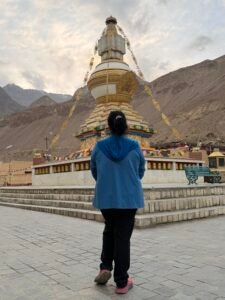
The words that comes to my mind which best describes this place is – “ Blank canvas which is waiting for you to fill colours
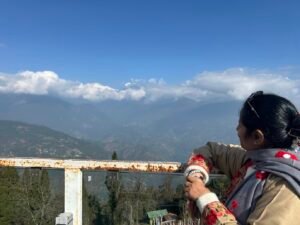
“I realized how many women hold themselves back from traveling alone—and I wanted to change that.”
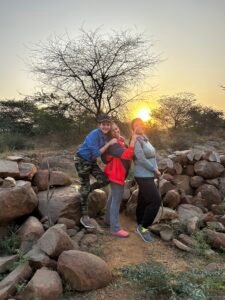
Solo trekking is not an expression of independence from the world.
It is a practice in learning how to move through it responsibly, with attention to both terrain and self.
It is not test on Speed – It is endurance and Strength
