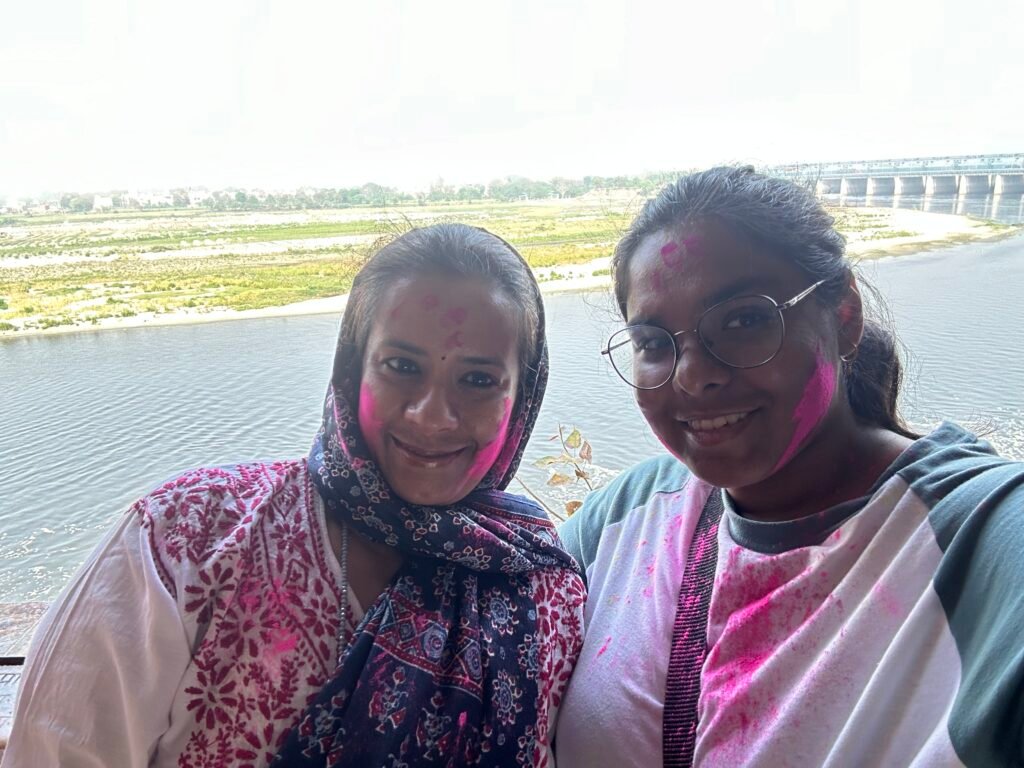
Holi in Mathura begins long before colour touches skin. It begins in waiting — in lanes that fill slowly, in voices gathering strength, in bodies standing close without yet moving. The air feels charged but restrained, as if everyone is holding the same breath. Nothing has happened yet, and yet the day already feels underway.
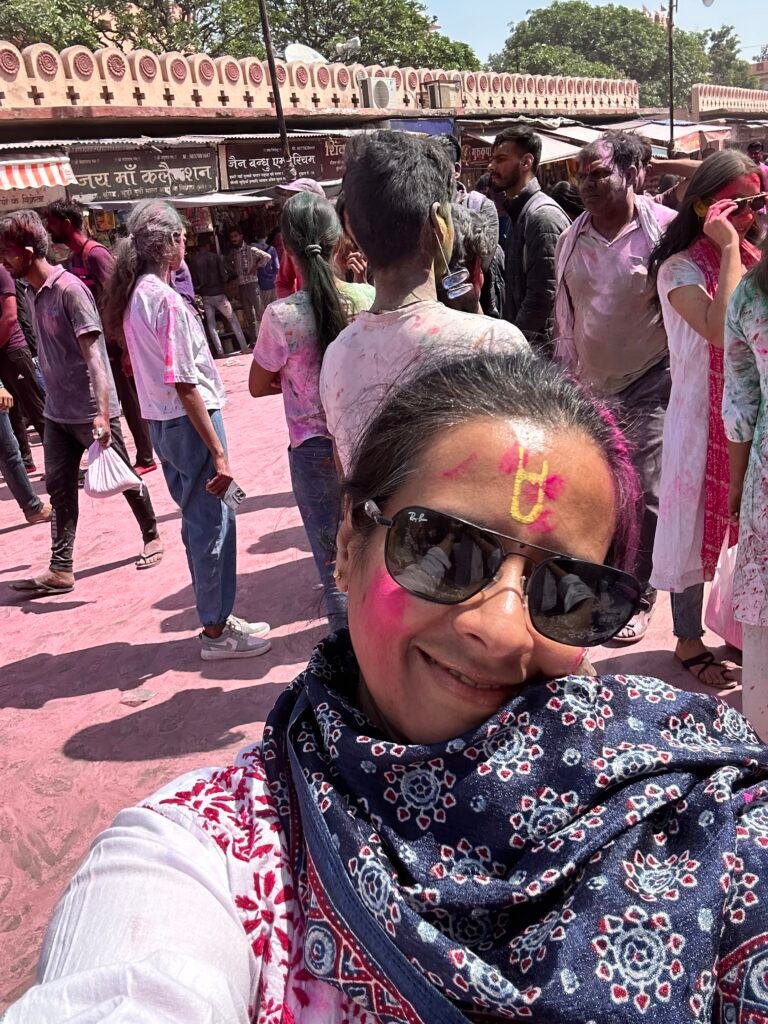
As morning advances, sound arrives before colour. Drums, chants, and shouted greetings move through the crowd in waves, loosening the edges of order. People press closer, anticipation thickening into something almost physical. When colour finally enters the space, it does not feel sudden or playful — it feels earned. A release rather than an interruption. Control slips away willingly, absorbed into collective motion.
Being inside Holi here is different from seeing it. The body stops observing and starts responding — to touch, sound, closeness, surrender. Identity blurs, not just in colour but in intent. Mathura does not stage Holi; it inhabits it. And when the moment passes, what lingers is not spectacle, but the quiet recognition of having stepped briefly into something older, heavier, and deeply shared.
Leaving Mathura, the intensity recedes quickly. In Agra, Holi feels more contained, almost polite. Colour appears in pockets rather than floods, and celebration fits itself around daily life instead of overtaking it. The city absorbs the festival without surrendering to it, returning easily to routine once the moment passes.
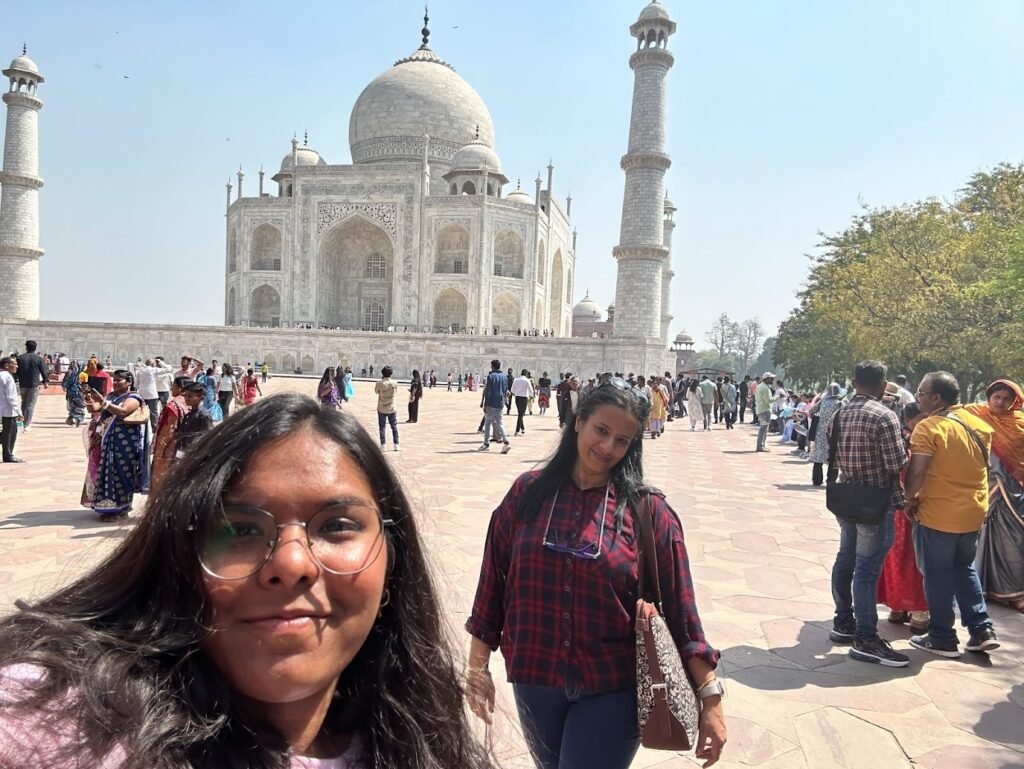
Near the Taj Mahal, Holi barely registers at all. Marble holds its distance. The monument remains untouched by colour or sound, steady in its own gravity. Watching people move past it on an ordinary day after Holi only sharpens the contrast — between a festival that dissolves form and a structure that insists on permanence. Here, time does not release itself; it stands still, carefully preserved.
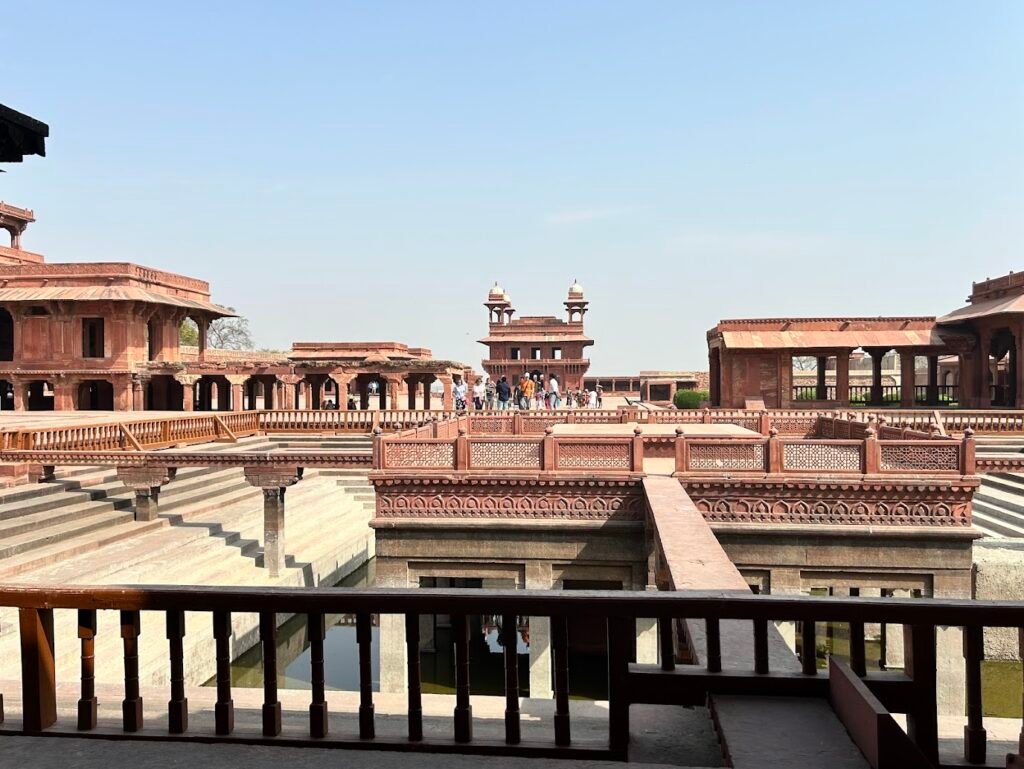
At Fatehpur Sikri, the mood shifts again. The city is quiet, emptied long ago, its courtyards holding only wind and light. Holi feels irrelevant here — not absent, but unnecessary. Where Mathura gathers bodies and belief, Fatehpur Sikri holds silence. Together, these places trace a spectrum: ritual lived intensely, power monumentalised, and ambition abandoned. Seen in sequence, they make Holi in Mathura feel not louder, but heavier — a moment that belongs unmistakably to the living.