
Some places change how you look. Others change how you move.
I felt this difference most clearly between Ajanta and Ellora — two sites carved from the same stone, yet asking for entirely different kinds of attention. One draws you inward, narrowing vision and slowing the body. The other keeps sending you outward, across courtyards and thresholds, refusing stillness for long.
This is not a comparison of scale or significance. It is about orientation — where a place directs your gaze, your steps, and eventually, your thoughts.
AJANTA - Ajanta: Learning to Look Slowly
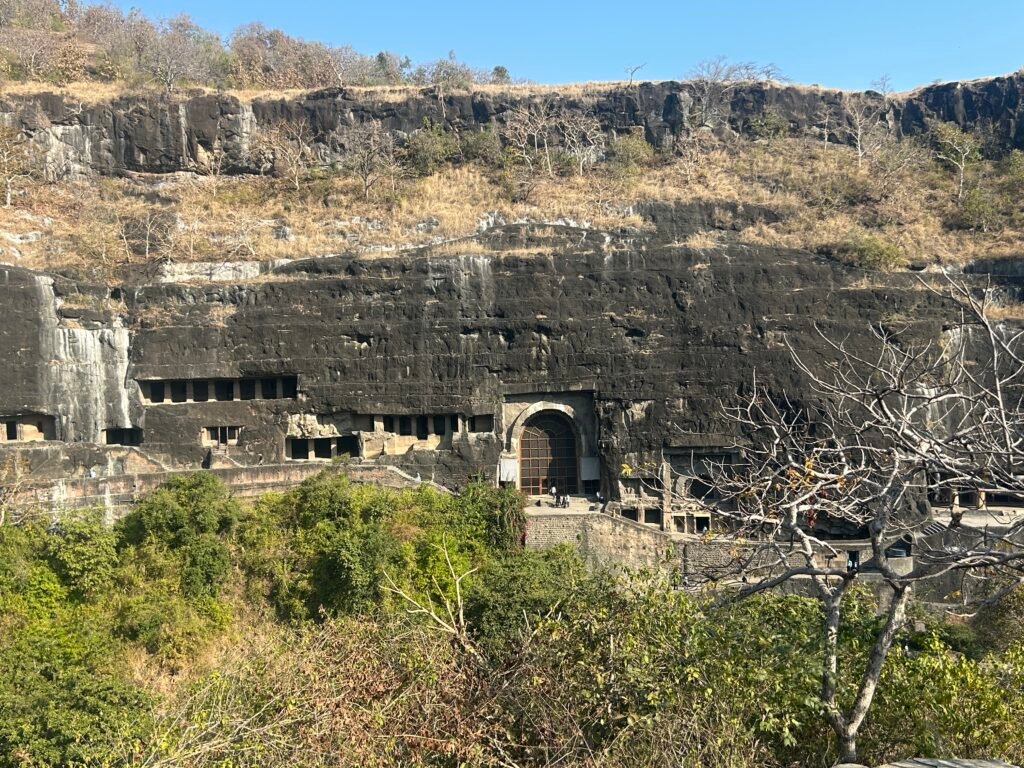
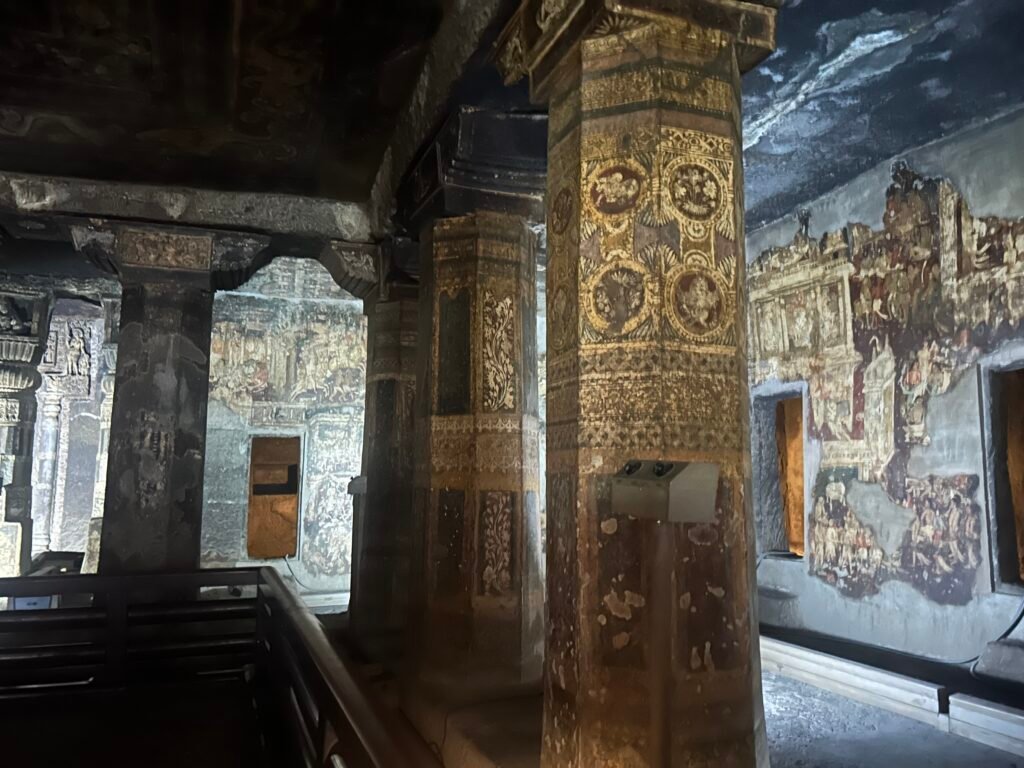
Ajanta does not reveal itself immediately. The approach curves, the gorge closes in, and light drops away as you step inside the caves. Vision adjusts gradually. Details emerge only after patience — a face in shadow, a gesture on a wall, colour held together by time and darkness.
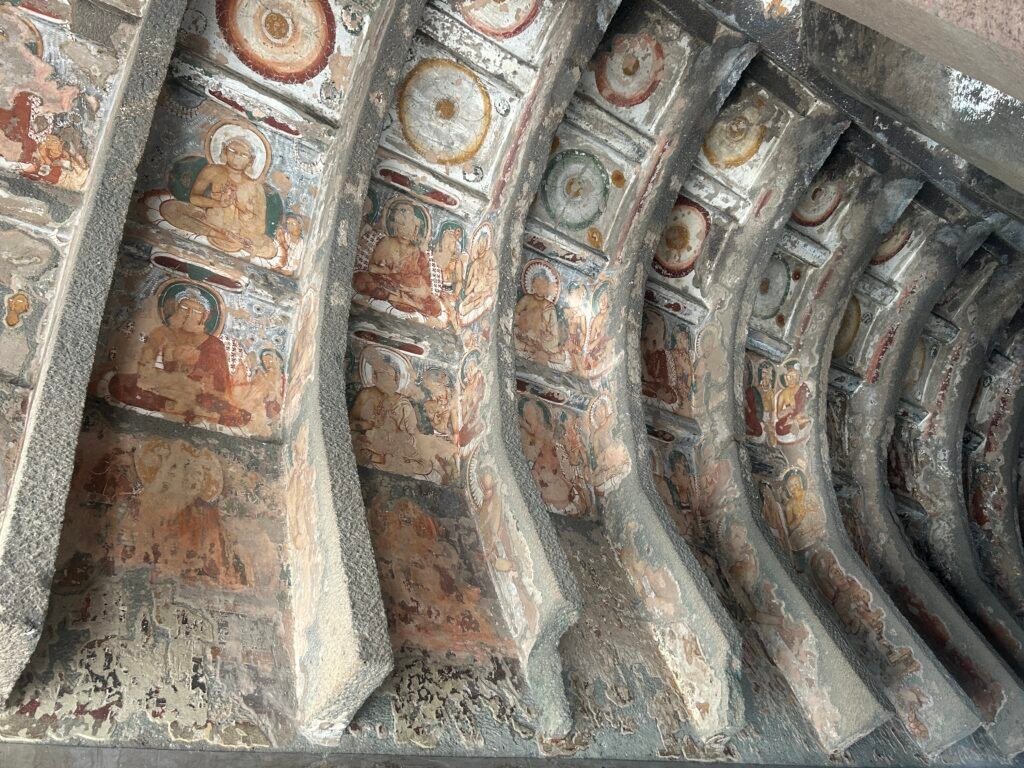
Inside Ajanta, movement feels secondary. You stop often, not because the space demands it, but because looking does. The murals pull attention inward, holding it there. Walls become surfaces of concentration rather than passage. Even sound behaves differently — softened, absorbed, unwilling to travel far.
The body responds instinctively. Steps shorten. Breathing slows. You stand closer to the walls than you expect to. Ajanta teaches a kind of stillness that is active — not emptiness, but focus. It does not overwhelm. It insists on intimacy.
What remains strongest is not grandeur, but closeness: faces painted at human scale, expressions caught mid-thought, stories that unfold quietly if you give them time. Ajanta is not learned by walking through it. It is learned by staying.
Ellora: Understanding Through Movement
Ellora behaves differently from the first step.
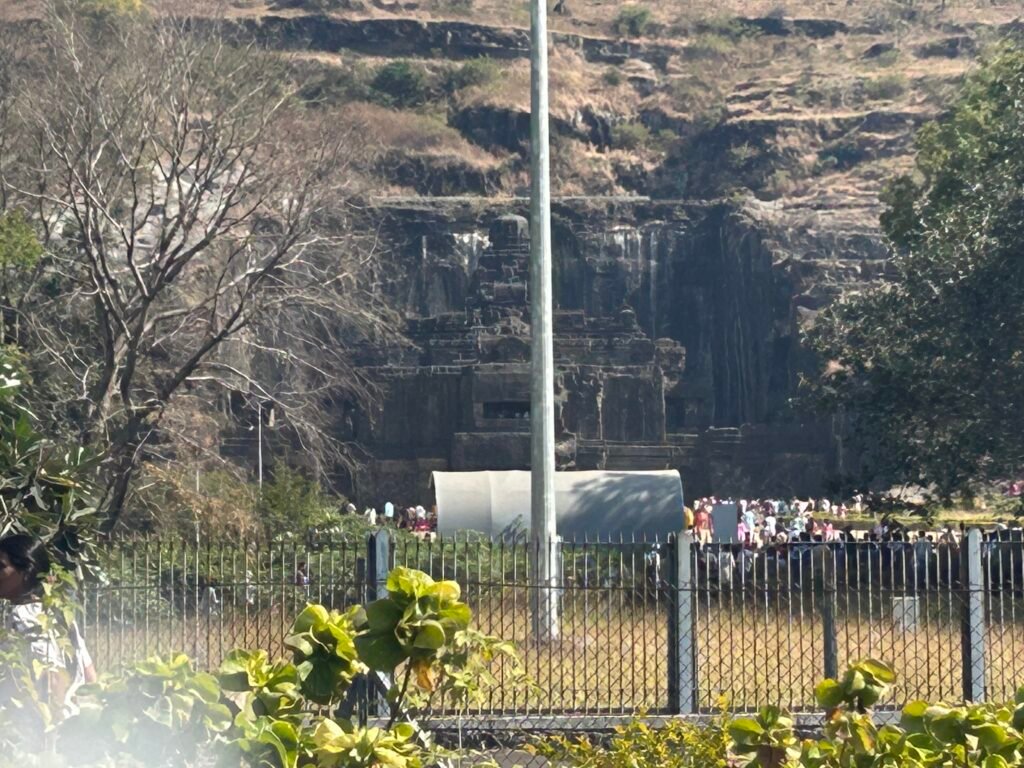
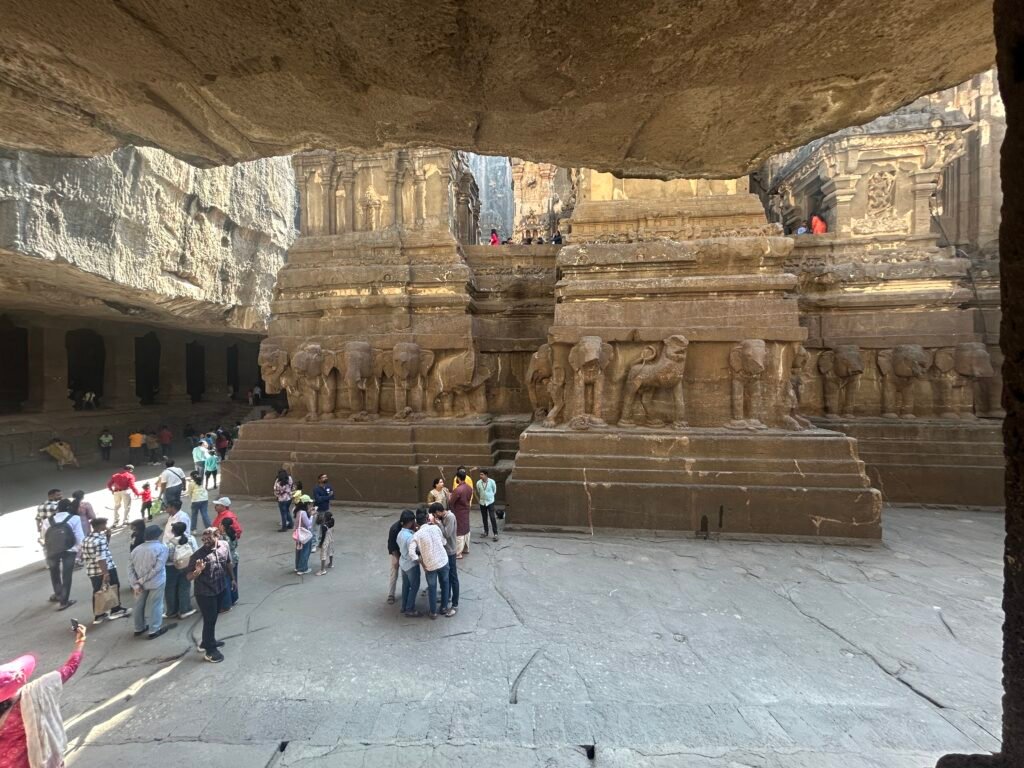
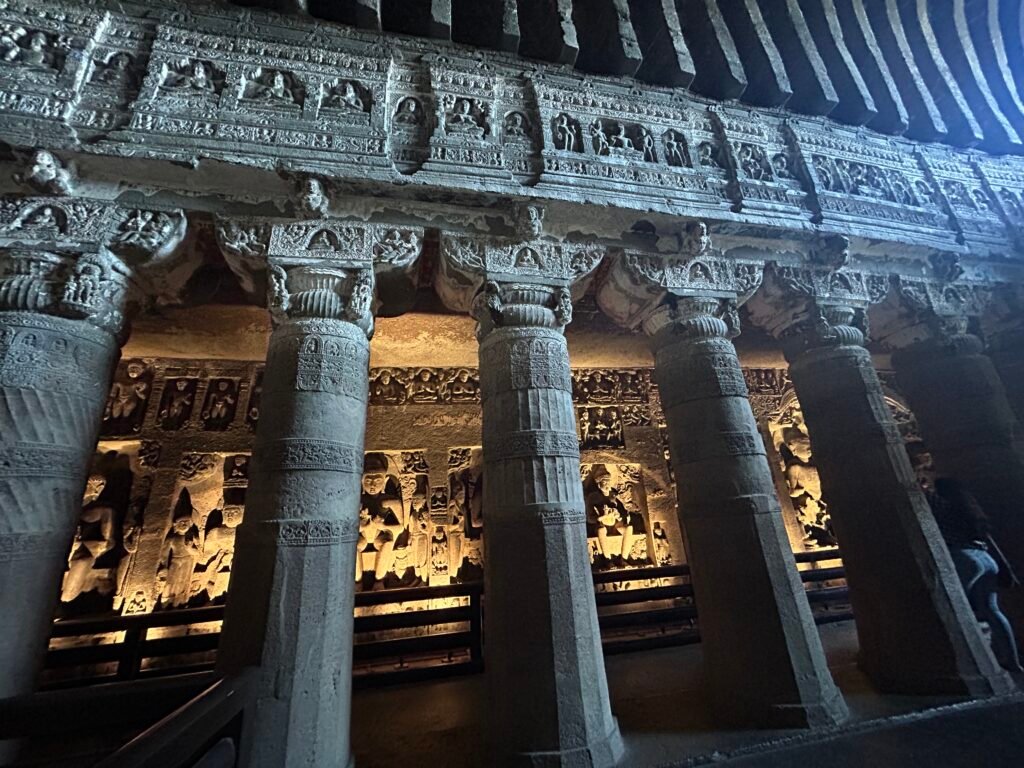
Here, the body is asked to move. From cave to cave, from darkness into open courtyards, from enclosure into sudden scale, the site unfolds spatially rather than visually. Understanding arrives through walking, through the rhythm of entering and exiting, through repeated shifts in light and proportion.
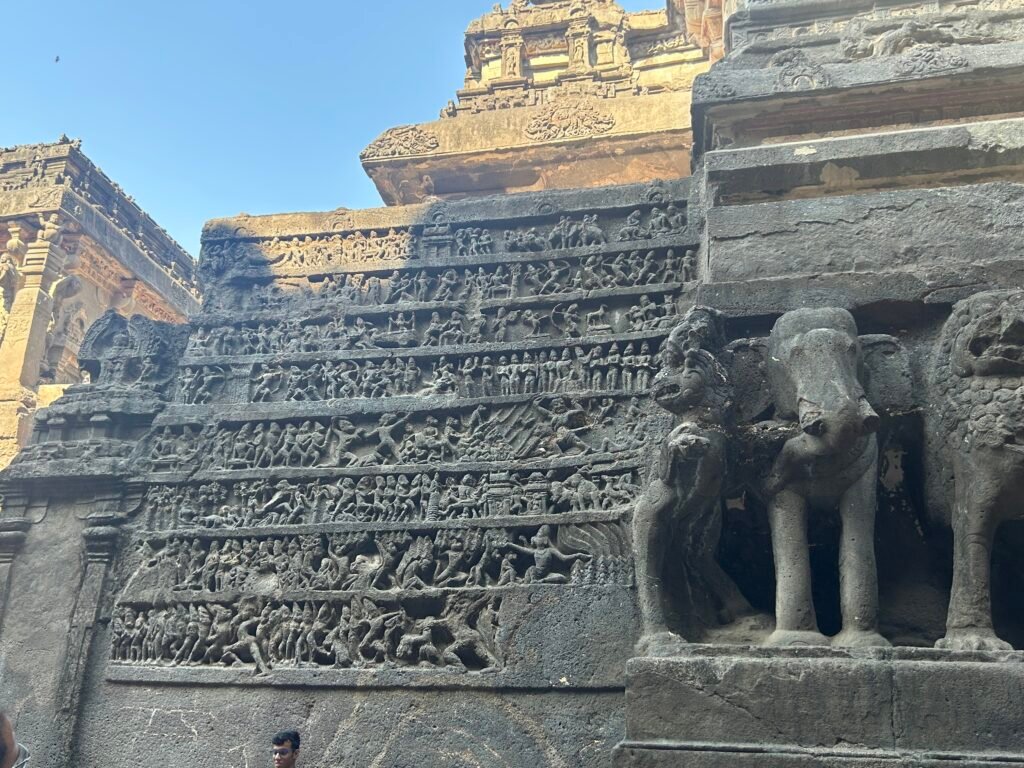
Ellora does not reward lingering in one place for too long. It keeps redirecting you — outward, onward, across thresholds. The Kailasa Temple does not invite quiet observation so much as physical orientation. You circle it. You step back. You crane your neck. The experience is architectural before it is emotional.
Even belief systems here are encountered sequentially rather than concentrically. Buddhist, Hindu, and Jain spaces do not collapse into each other; they unfold in order, asking the body to carry the transition. Ellora teaches not by detail, but by accumulation of movement.
Where Ajanta compresses attention, Ellora disperses it. You understand Ellora not by standing still, but by traversing space.
Two Ways of Holding the Body
The contrast becomes clearest in how the body behaves without instruction.
At Ajanta, you lean inward — toward walls, toward darkness, toward detail. At Ellora, you step outward — into light, into scale, into sequence. One encourages proximity; the other requires distance. One holds you; the other releases you repeatedly.
Neither is more profound. They simply ask different things.
Ajanta demands patience and surrender to looking.
Ellora demands stamina and attentiveness to movement.
What This Difference Leaves Behind in me ?
Leaving Ajanta, the eyes take time to adjust. Light feels intrusive at first. The world seems louder, less precise.
Leaving Ellora, the body feels worked. There is a physical memory of distance covered, thresholds crossed, scale negotiated.
Together, they form a complete education — not in history, but in attention. Ajanta teaches how to stay with what is close. Ellora teaches how to move through what is vast. One turns you inward. The other pushes you outside. And somewhere between the two, you begin to understand not the sites themselves, but how space shapes perception.
The Ellora Caves
The Ajanta Caves