
Choosing Solitude

Decision to Travel Alone

Travelling alone did not begin as a declaration of independence. It began as a practical decision — schedules that didn’t align, interests that didn’t overlap, a quiet curiosity that felt easier to follow without negotiation. What I didn’t anticipate was how quickly the absence of companionship would sharpen my perception !

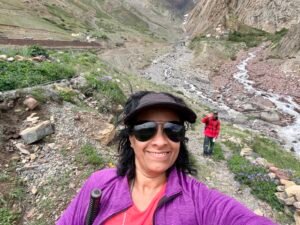
On the road to Kedarnath, every decision belonged to me alone: when to stop, when to continue, when to trust my breath over my ambition. There was no shared momentum to carry me forward, no external reassurance to dilute doubt. The journey became less about reaching the shrine and more about learning how to move without borrowed certainty.

In Benaras, travelling alone created a different kind of attentiveness. Without conversation as a buffer, I became aware of the city’s rhythms — the way mornings gathered at the ghats, the gradual quiet of afternoon lanes, the density of evening rituals. Solitude allowed the place to arrive without interpretation.

What began as convenience slowly revealed itself as a method of travel: a way of experiencing places without mediation.

Independence vs Isolation

Independence in travel is often imagined as freedom from constraint. In reality, it comes with a constant awareness of vulnerability. Moving alone through unfamiliar environments requires alertness — reading situations, adjusting behaviour, making decisions without consensus.

In the villages of the Konkan, independence meant negotiating small uncertainties: transport that ran on local rhythms, conversations conducted through gestures and patience, evenings that arrived earlier than expected. Isolation surfaced not as loneliness, but as the absence of shared interpretation — no one to confirm whether an experience was ordinary or unusual.

Yet this isolation also created space. Without needing to accommodate another person’s pace or expectations, I could linger where something felt unfinished — a courtyard conversation, a roadside tea stall, a path that didn’t lead anywhere significant. Independence allowed curiosity to guide movement rather than itinerary.

Over time, the line between independence and isolation softened. Solitude stopped feeling like absence and began to feel like presence — a quieter, more deliberate way of occupying space.

Reclaiming Time and Space

Travelling alone alters the structure of time. Days stretch or contract according to attention rather than plans. Waiting becomes part of the experience rather than an inconvenience.

In the forests and tea landscapes of The Dooars, reclaiming time meant accepting slowness — buses that arrived when they did, roads that required patience, afternoons shaped by weather rather than intention. Without companions to entertain or coordinate with, I learned to inhabit these pauses fully.

Space changes too. Alone, you become more aware of where you are allowed, where you are visible, where you blend in and where you don’t. This awareness is not restrictive; it is clarifying. It teaches you how environments respond to your presence and how to move respectfully within them.

At the ancient sites of Ajanta Caves and Ellora Caves, solitude made time feel layered rather than linear. Without the pressure to keep up with a group, I could stay until the light shifted, until the spaces felt less monumental and more inhabited. The experience became less about seeing everything and more about allowing certain moments to unfold fully.

Travelling alone did not give me more time in a literal sense. It changed my relationship to it — from something to manage into something to inhabit.

Woman on Trek or Trails hand book

It is not test on Speed – It is endurance and Strength