Some landscapes are shaped by abundance. Others by what has disappeared. The journey from water to desert is not a sudden crossing but a slow realisation that movement has thinned out — rivers widening into silence, soil losing its hold on green, air drying into something weightless.
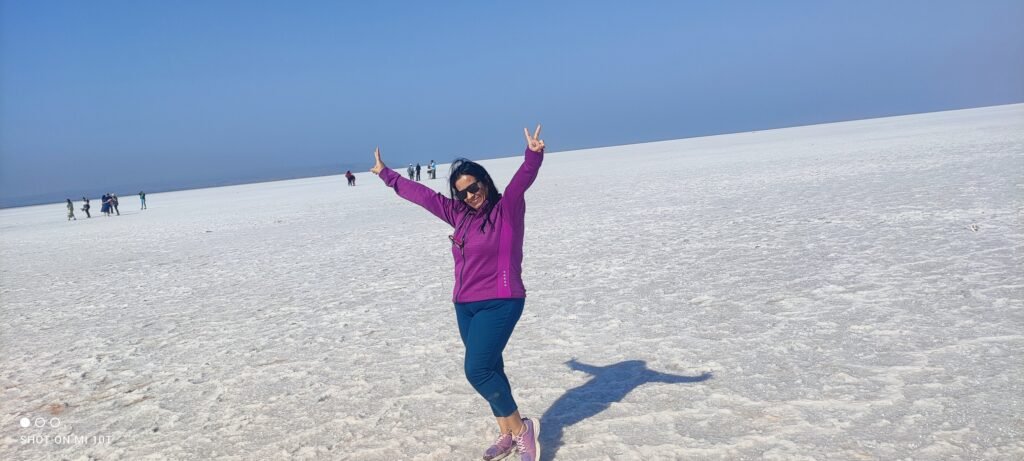
Near the Great Rann of Kutch, water is never entirely absent. It lingers in memory — in salt that crusts the earth, in channels that fill briefly and vanish again, in the geometry of land that still remembers tides. The horizon expands not because the land opens, but because nothing interrupts it anymore.
The transition begins subtly. Marsh becomes cracked ground. Vegetation lowers itself to the earth. Sound travels farther because there is so little to absorb it. What once carried life now reflects exposure. You become aware of distance in a new way — not as something to traverse, but as something that surrounds you.
At Dholavira, the idea of water shifts again. Here, absence is not defeat but design. The settlement reveals how carefully people once negotiated scarcity — harvesting, storing, and respecting water as something temporary. The desert does not erase human effort; it preserves it in outlines and systems that remain legible long after use has ended.
Moving through these landscapes, you stop expecting movement. Time feels suspended rather than slow. The land offers no shelter, no distraction, no narrative of arrival. It simply exists — austere, patient, indifferent to the need for meaning.
What remains after water withdraws is not emptiness, but exposure. You see the land without softening, without cover, without the illusion of permanence. And in that clarity, something quiet emerges — an understanding that absence, too, shapes how we move, settle, and remember.