
Adventure, for women, is often framed as courage against danger or proof of capability. In reality, it is quieter and more deliberate. It is the decision to step into environments that demand preparation, restraint, and awareness — not recklessness.
This page explores journeys where terrain tests the body, uncertainty sharpens attention, and confidence grows not from conquering landscapes but from learning how to move through them responsibly.
Adventure is not defined by risk alone. It is defined by how carefully that risk is understood.
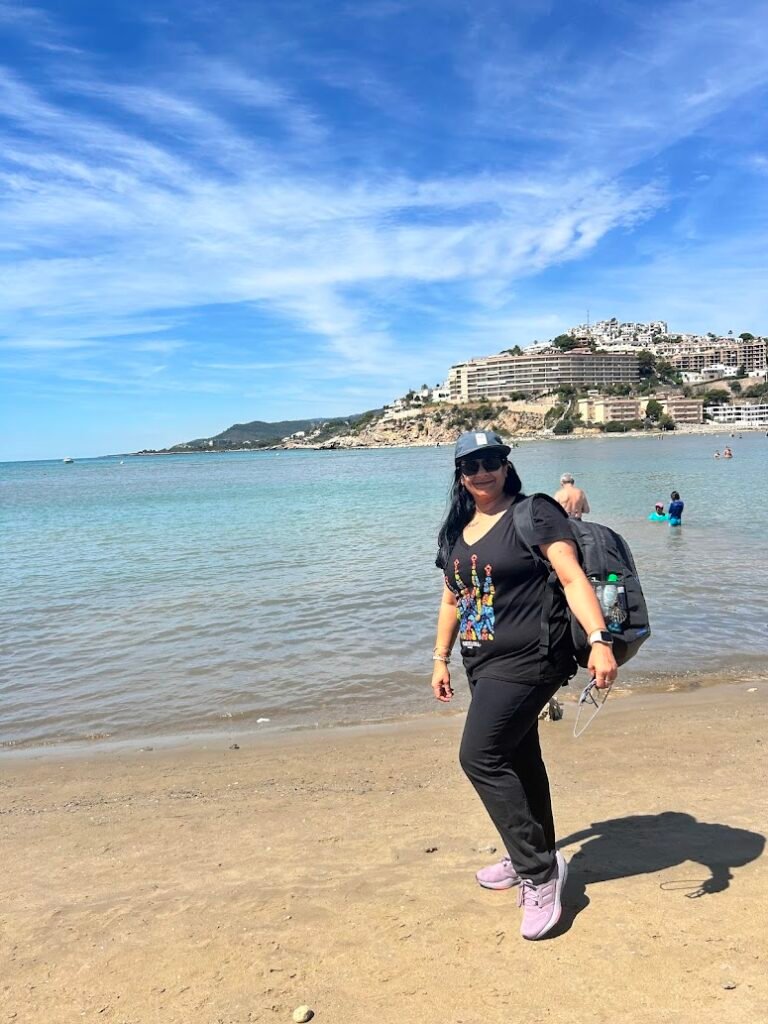
Adventure travel is rarely about thrill-seeking. It is about recalibration — stepping outside familiar structures to encounter a version of oneself that everyday life does not require.
For many women, these journeys offer something difficult to access elsewhere: autonomy over decision-making, freedom from expectation, and the opportunity to experience physical capability without mediation. The challenges encountered on a trek, a climb, or a remote journey are immediate and tangible, leaving little room for doubt about what you can endure.
Adventure becomes a conversation with limits — discovering which boundaries are protective and which are inherited.
 RISK AS NEGOTIATION
Risk in adventure travel is not an obstacle to overcome but a variable to manage.
Weather, terrain, isolation, fatigue, and unfamiliar systems create conditions that cannot be controlled, only navigated. Women travellers often approach these environments with heightened caution, not as weakness but as strategy.
Negotiation replaces bravado:
Choosing when to proceed
Knowing when to retreat
Adapting plans without seeing it as failure
The ability to adjust becomes the most valuable skill.
Adventure travel strips away abstraction. Strength becomes measurable in breath, pace, balance, and recovery.
On demanding routes like the ascent to Kedarnath, the body dictates terms. Altitude alters energy, cold affects coordination, fatigue reshapes perception. Plans shrink to immediate needs: hydration, warmth, steady movement.
This physical reality can be confronting, but it is also clarifying. It reveals resilience that is practical rather than performative — endurance built from persistence rather than speed.
Fear is often portrayed as something to overcome. In adventure travel, it is more useful as guidance.
Fear sharpens attention. It signals when conditions exceed comfort, when caution should replace momentum, when rest is necessary. Ignoring fear increases risk; listening to it refines judgment.
Over time, fear changes character. It becomes less overwhelming and more precise — a tool rather than a barrier.
Preparation is not only logistical; it is psychological.
Researching terrain
Understanding weather patterns
Training the body
Packing deliberately
Planning exit options
These actions reduce uncertainty and allow focus on the experience itself.
Preparation also builds confidence — not from believing nothing will go wrong, but from knowing you can respond if it does.
Adventure rarely happens entirely alone. Guides, local communities, fellow travellers, and support systems play essential roles.
For women, learning how to accept help without surrendering autonomy is part of the journey. Collaboration enhances safety while independence preserves agency.
Trust becomes selective rather than automatic.
Adventure travel does not produce dramatic transformation. Its effects are subtle but lasting.
Increased self-trust
Greater tolerance for uncertainty
Respect for limits
Awareness of capability
Returning home, the world feels slightly altered — not because it changed, but because your relationship to risk, effort, and fear has shifted.
Adventure leaves behind a quiet steadiness.
Closing THOUGHTS Adventure travel for women is not about proving strength to others. It is about understanding strength for oneself — where it comes from, how it sustains, and when it needs rest.
The landscapes fade, but the recalibration remains.
It is not test on Speed – It is endurance and Strength